
San Francisco Workers' Compensation Lawyer
Helping injured workers understand their rights after workplace accidents and serious job-related injuries.






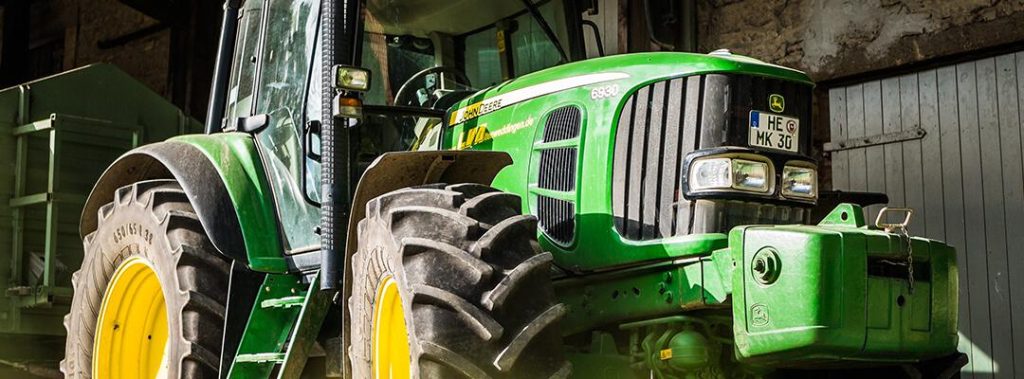
Tractors are used on farms, construction sites, industrial properties, landscaping projects, and other workplaces throughout California. Their size, weight, moving components, and ability to operate on uneven terrain make them useful—but also potentially dangerous.
A tractor accident can cause catastrophic injuries or death. When an accident occurs at work, the injured person may have a workers’ compensation claim. If defective equipment or the negligence of someone other than the employer contributed to the accident, a separate personal injury claim may also be available.
Anderson Franco Law represents people seriously injured in tractor and heavy-equipment accidents throughout San Francisco and the Bay Area.
Call or text (415) 727-1832 for a free consultation with a tractor accident lawyer.
A tractor may overturn when operated on a steep slope, unstable ground, soft shoulder, excavation edge, or other uneven surface. Rollovers may also result from excessive speed, sharp turns, improper loading, or unsafe attachment use.
A rollover protective structure can reduce the risk of fatal injury when used correctly with a seat belt. If a tractor lacks required protection, has a defective safety system, or is operated under unsafe conditions, several parties may share responsibility.
Tractor operators need appropriate training and supervision. Accidents may result from:
Operator error does not always mean the operator alone is responsible. The employer, contractor, or equipment owner may have failed to provide proper training, supervision, maintenance, or site planning.
Tractors contain complex mechanical, hydraulic, electrical, and safety systems. An accident may result from:
Maintenance records, inspection reports, service manuals, repair invoices, and the tractor itself may be critical evidence.
A power take-off, commonly called a PTO, transfers power from a tractor to attached equipment. An unguarded or defective PTO shaft may catch clothing, hair, or a body part, causing severe entanglement, crush injuries, amputations, or death.
Potential causes include missing guards, defective shields, inadequate training, poor maintenance, or failure to shut down and isolate the equipment before service.
A worker may be struck or pinned when a tractor moves unexpectedly, rolls after being parked, or operates in an area with poor visibility.
These accidents may involve:
Tractors may be used with loaders, mowers, plows, trenchers, augers, forks, backhoes, and other attachments. An improperly installed, overloaded, defective, or incorrectly operated attachment can destabilize the tractor or strike nearby workers.
Responsibility may rest with the operator, employer, rental company, attachment manufacturer, maintenance provider, or another contractor.
A tractor carrying or lifting materials may tip when a load is unbalanced, improperly secured, or raised too high. A worker may also be struck by falling cargo, a detached attachment, or material released from a loader.
Tractor accidents may be caused or worsened by:
A property owner, general contractor, subcontractor, or site manager may be responsible for a dangerous condition, depending on who controlled the area and created the hazard.
The force generated by a tractor can cause life-changing injuries, including:
Severe injuries may qualify as catastrophic injuries when they cause lasting disability, substantial future medical needs, or the loss of independence.
An employee injured while operating or working near a tractor may qualify for California workers’ compensation benefits, regardless of who caused the accident.
Potential benefits include:
Workers’ compensation generally covers medical care reasonably required to cure or relieve the effects of a work-related injury. Treatment may include emergency services, surgery, hospitalization, medication, diagnostic testing, rehabilitation, psychological care, and appropriate medical equipment.
An injured worker may receive temporary disability payments if a doctor determines that the worker cannot perform regular duties while recovering and the employer does not provide suitable modified work.
Permanent disability benefits may be available when the accident causes lasting impairment. The amount depends on the medical evidence, disability rating, occupation, age, date of injury, and applicable apportionment rules.
An eligible worker who cannot return to regular employment and does not receive qualifying modified or alternative work may receive a voucher for approved education or retraining expenses.
When a tractor accident causes death, eligible dependents may receive workers’ compensation death benefits and burial expenses, subject to California law.
Workers’ compensation generally does not provide damages for pain and suffering. It also ordinarily prevents an employee from suing the employer for negligence, although limited exceptions may apply.
A tractor accident may support a separate personal injury claim when someone other than the employer caused or contributed to the accident.
Potential third parties include:
A third-party claim may provide compensation that workers’ compensation does not, including pain and suffering and more complete recovery of lost earning capacity.
An injured person may sometimes pursue workers’ compensation and a third-party claim at the same time. The workers’ compensation insurer may have reimbursement and credit rights, so the two claims should be coordinated carefully.
A tractor manufacturer, distributor, or seller may be responsible when a defect contributes to an accident.
Potential defects include:
A product liability case may require engineers and other experts to inspect the equipment, evaluate alternative designs, and determine whether a defect existed when the tractor left the manufacturer’s control.
The tractor and its components should be preserved in their post-accident condition whenever possible.
Construction sites commonly use tractors, backhoes, loaders, and other heavy equipment. An injured worker may have a workers’ compensation claim and a third-party case against a contractor, property owner, equipment provider, or another company.
A construction accident claim may involve:
Construction sites change quickly. Equipment may be moved, site conditions altered, and video overwritten. Prompt investigation can make a significant difference.
Tractors sometimes travel on or cross public roads. Their speed, size, limited visibility, and agricultural attachments can create serious risks for motorists, bicyclists, and pedestrians.
A collision may involve:
Depending on who caused the crash, the injured person may have a car accident claim, a commercial-vehicle claim, or workers’ compensation benefits.
Potentially responsible parties may include:
More than one party may share liability. The investigation should consider who owned the equipment, controlled the work, created the hazard, employed the operator, and carried applicable insurance.
Important evidence may include:
Do not allow equipment to be repaired, altered, sold, or destroyed before it has been properly documented and, when appropriate, inspected by qualified experts.
A successful personal injury claim may provide compensation for:
The value of the claim depends on fault, injury severity, future medical needs, permanent limitations, employment consequences, and available insurance.
If a tractor accident causes death, eligible family members may be able to pursue a wrongful death claim against a responsible third party.
Recoverable damages may include certain financial losses, funeral expenses, and the loss of the deceased person’s companionship, care, assistance, protection, and guidance.
A survival action may also be available on behalf of the estate. When the accident occurred at work, workers’ compensation death benefits and a third-party wrongful death claim may overlap.
Employers, owners, and operators can reduce risk by:
Safety practices do not replace the need to investigate responsibility after an accident, but they may help establish what should have been done differently.
California generally provides two years to file many negligence-based personal injury lawsuits. Different deadlines may apply when the case involves:
Claims against a California public entity commonly require presentation of an administrative claim within six months after the claim accrues.
Workers’ compensation claims also have separate notice and filing requirements. Report a work-related injury promptly and obtain advice about the deadlines that apply to the specific facts.
Tractor accident cases may involve workers’ compensation, defective machinery, several contractors, commercial insurance, and substantial future damages.
Anderson Franco Law can help:
Before representing injured people, Anderson Franco defended insurance companies in negligence cases. That experience helps him anticipate arguments involving liability, causation, medical treatment, insurance coverage, and damages.
If you or a family member suffered a serious tractor injury, act promptly. Equipment may be repaired, conditions may change, and important evidence may disappear.
Contact Anderson Franco Law or call or text (415) 727-1832 for a free consultation with a San Francisco tractor accident lawyer.
This page provides general information and does not constitute legal or medical advice. Every case depends on its specific facts, and legal deadlines may vary. Reading this page does not create an attorney-client relationship.
Fill out the contact form or call us at (415) 727-1832 to schedule your free consultation.


San Francisco, CA 94105

San Rafael, CA 94903

Greenbrae, CA 94904