





Disc Bulge After a Car Accident


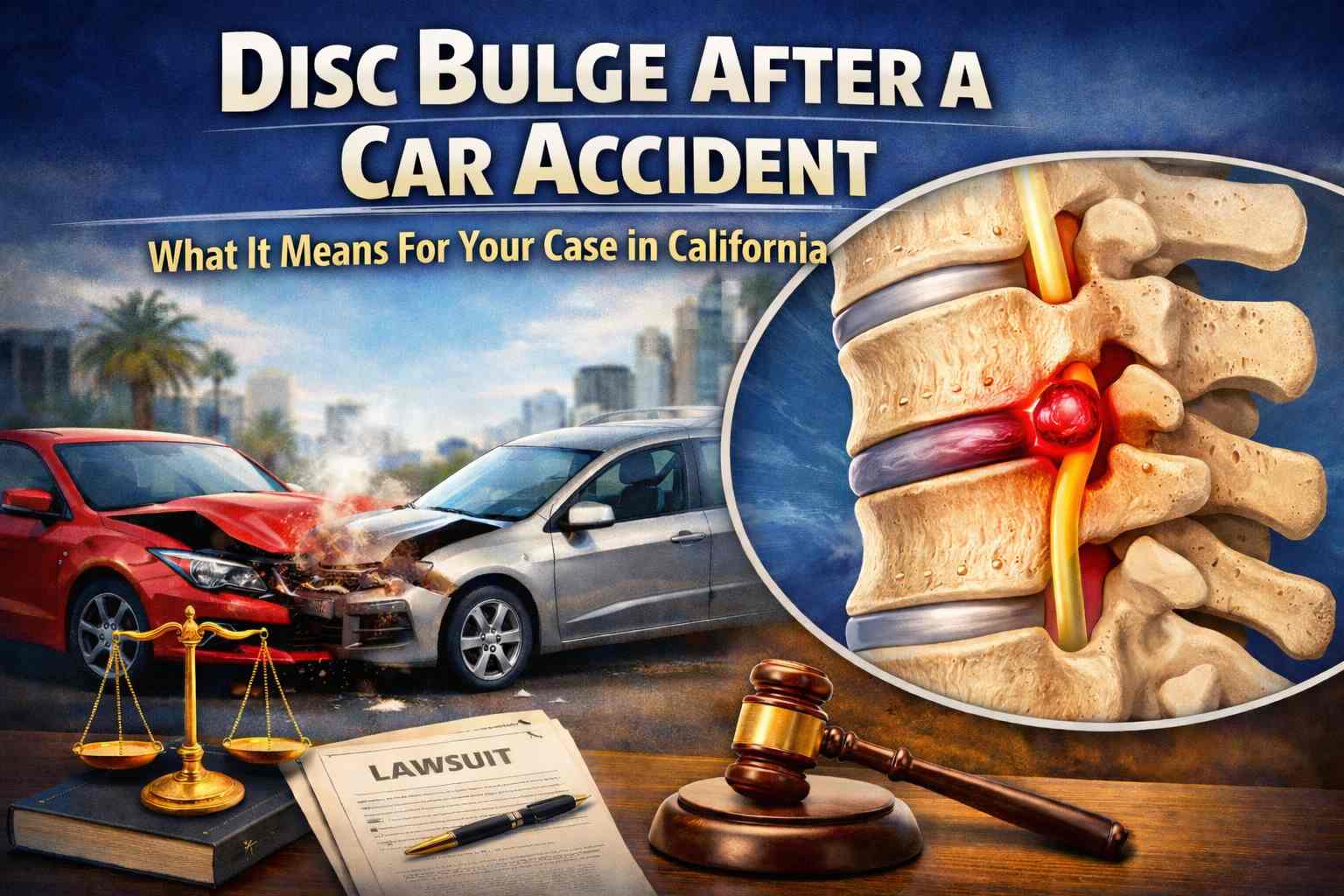
Disc Bulge After a Car Accident: What It Means for Your Claim in California
A car accident can change your life in seconds. Many people feel neck or back pain after a crash. Sometimes a doctor finds something called a disc bulge. This can sound scary. However, it is a common injury after a strong impact.
In this article, we explain what a disc bulge is. We also explain how it can affect your injury claim in California. If you were hurt in a crash, this information is important for you.
What Is a Disc Bulge?
Your spine is made of small bones called vertebrae. Between each bone is a soft disc. These discs act like cushions. They help your back bend and move without pain.
During a crash, your body can move very fast and very hard. The force can push a disc out of place. When the disc sticks out, it is called a disc bulge.
You usually cannot see this injury from the outside. Doctors often use an MRI to find it. Even though it may not show on the outside, it can cause real pain.
Common Symptoms After a Car Accident
After a crash, you may feel:
- Neck pain
- Lower back pain
- Tingling in your arms or legs
- Weakness
- Pain that travels down one leg
At first, the pain may feel small. However, it can get worse over time. That is why you should see a doctor right away.
If you wait too long, the insurance company may argue that your injury was not caused by the accident.
Is a Disc Bulge the Same as a Herniated Disc?
Not exactly. A disc bulge means the disc pushes out slightly. A herniated disc means the disc tears and more material pushes out.
Both injuries can press on nerves. Both can cause serious pain. The difference is how much damage there is.
Even a disc bulge can affect your daily life and your ability to work.
How Does a Disc Bulge Affect Your Injury Claim in California?
In California, you can seek compensation if another driver caused the crash. To win your claim, you must show:
- The other driver was at fault
- You suffered an injury
- The injury was caused by the accident
A disc bulge can help prove that you were seriously hurt. However, insurance companies often argue that disc bulges are “pre-existing.” They may claim you had the problem before the crash.
That is why medical records are very important. Imaging studies, doctor notes, and treatment plans can support your case.
What Compensation Can You Recover?
If your claim is successful, you may recover money for:
- Medical bills
- Physical therapy
- Medication
- Surgery, if needed
- Lost wages
- Pain and suffering
Every case is different. The value depends on how severe the injury is. It also depends on how much it affects your life and work.
What If You Had a Prior Back Problem?
Many adults have some wear and tear in their spine. This is normal as we age. However, if the accident made your condition worse, you may still have a strong case.
Under California law, a person who causes harm is responsible for the damage they create. Even if you were more vulnerable than others.
Medical experts can compare imaging from before and after the crash. This can show how the accident made your condition worse.
Why Acting Quickly Matters
In most California car accident cases, you have two years from the date of the crash to file a lawsuit. This is called the statute of limitations.
If you miss this deadline, you may lose your right to recover money. Also, the sooner you act, the easier it is to gather strong evidence.
Should You Speak With a Lawyer?
Insurance companies focus on paying as little as possible. They may offer a quick settlement. However, that offer may not cover future medical care.
A lawyer can review your case. They can deal with the insurance company for you. This allows you to focus on healing.
If you suffered a disc bulge after a car accident in California, it is important to understand your rights.
Attorney Anderson Franco
A disc bulge is not a small injury. It can cause pain for months or even years. It can affect your job, your family, and your daily life.
If someone else caused the crash, you may have the right to compensation. Strong medical evidence is key. Acting within the legal deadline is also important.
Understanding your injury is the first step. Protecting your legal rights is the next.

Our Location
Get in Touch
Fill out the contact form or call us at (415) 727-1832 to schedule your free consultation.


