







Filing a Slip and Fall Claim Against the Government in CA


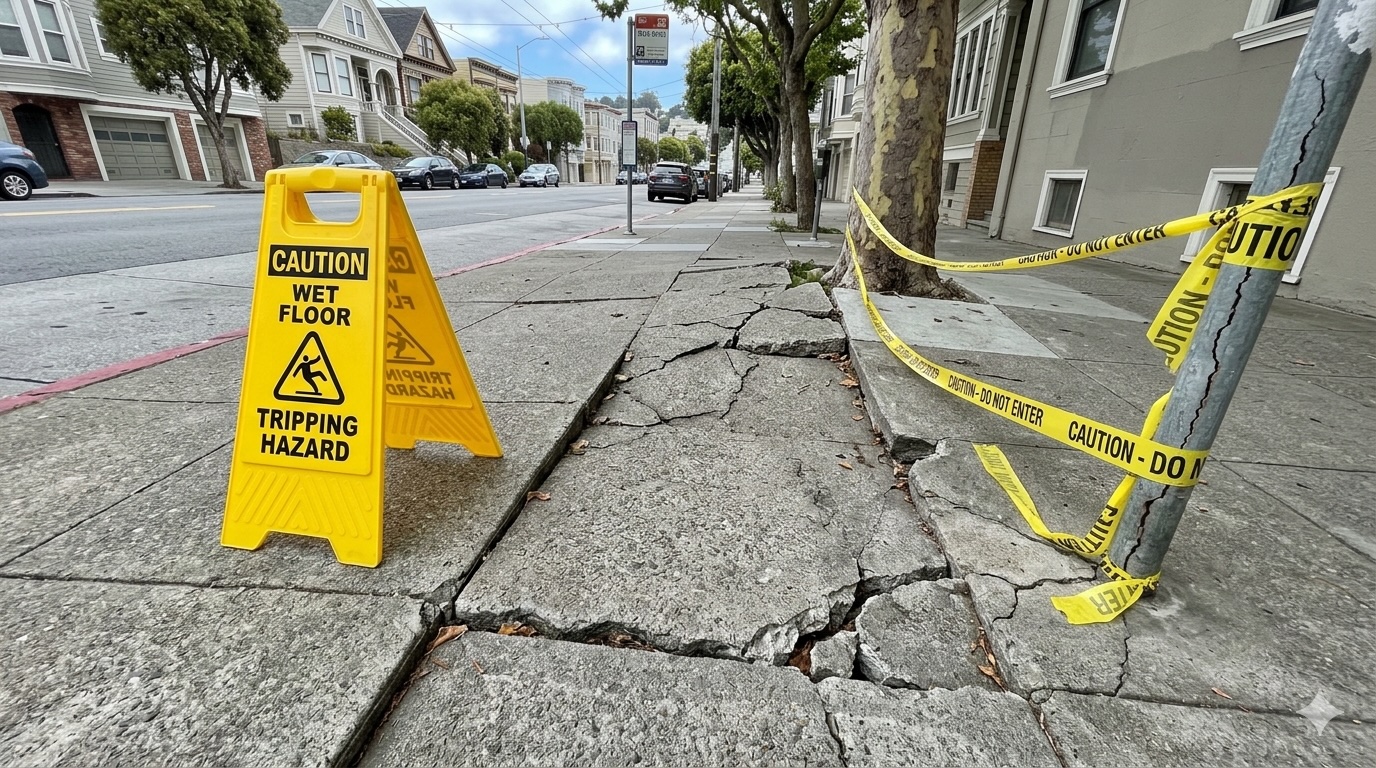
Navigating a personal injury case shifts drastically when your injury occurs on public land rather than private property. If you trip on a cracked sidewalk in downtown San Rafael or slip on a slick floor inside a San Francisco municipal building, you face a completely unique set of legal rules. Understanding the strict procedural requirements for filing a slip and fall claim against the government in California is vital if you want to protect your right to financial recovery.
Sovereign Immunity and the Main Exceptions
Historically, the legal doctrine of sovereign immunity protected public entities from lawsuits. However, the California Tort Claims Act creates specific exceptions that allow injured individuals to hold public entities accountable. Under California Government Code Section 835, a public entity may be held liable if a dangerous condition on their property created an unreasonable risk of injury, provided the entity had advance notice of the hazard.
Whether your accident happened at a public park in Marin County or while boarding a Muni vehicle in San Francisco, proving liability requires showing that the government failed to exercise ordinary care. As a former insurance defense attorney, I know exactly how government risk managers and insurance adjusters try to exploit legal loopholes to deny these claims. They frequently argue that the hazard was completely open and obvious, or that the agency lacked sufficient time to discover and fix the defect.
The Exceptionally Short Six-Month Deadline
The most critical difference between private premises liability and public entity claims involves the statute of limitations. For a standard injury case against a private business owner in California, you generally have two years to file a lawsuit under California Civil Code Section 1714. However, when you are filing a slip and fall claim against the government in California, you must present a formal written claim to the responsible public entity within just six months of the date of your accident.
Missing this strict six-month deadline almost completely bars you from pursuing compensation, regardless of how severe your injuries are. This rule applies to all local, county, and state agencies, including the San Francisco Municipal Transportation Agency (SFMTA) or a Marin County municipal department.
Steps for Navigating the Government Claims Process
1.Identify the Correct Government Agency:Immediate Action.
Determine exactly which public entity owns or controls the property where you fell. This could be a specific city, a county, or a state department like Caltrans.
2.File the Formal Written Claim:Within 6 Months.
Submit a detailed, written Government Code claim statement directly to the correct agency. Include the precise location, date, time, and specific description of the dangerous condition.
3.Await the Official Sufficiency Review:45-Day Period.
The public entity has 45 days to review your administrative claim. They will either accept it, reject it entirely, or allow the 45 days to pass without responding, which counts as a legal rejection.
4.Initiate the Lawsuit in Civil Court:Strict Deadlines Apply.
If the agency rejects your claim, you have exactly six months from the date of the mailing of the rejection notice to file a formal personal injury lawsuit in court.
Establishing a Dangerous Condition on Public Property
To secure a successful outcome, you must establish that the public property sat in a dangerous condition at the moment of your fall. This requires clear physical evidence, such as photographs of the unmaintained sidewalk, witness statements, or municipal maintenance logs.
| Evidence Type | Purpose in Government Claims | Key Regional Target |
| Photographic Proof | Shows exact height metrics of sidewalk cracks or depth of potholes. | SF Financial District, downtown San Rafael |
| Incident Reports | Establishes immediate notice and documents the exact timeline. | BART stations, Muni platforms, civic centers |
| Maintenance Records | Proves the agency had constructive notice of ongoing structural decay. | Public walkways along Highway 101 or local roads |
Public entities routinely defend themselves by claiming they did not have a reasonable amount of time to discover the hazard. Overcoming this defense requires showing that the dangerous condition existed for a long enough period that a reasonable inspection routine should have uncovered it.
The Direct Access Advantage for Your Case
When you are up against a massive city or county legal team, you cannot afford to get lost in an assembly-line personal injury firm. At Anderson Franco Law, APC, you get elite, authoritative representation with direct access to the primary attorney handling your case. I utilize my past insider knowledge of defense strategies to build aggressive, tailored cases for my clients.
If you or a loved one sustained injuries on public property, you may be eligible for compensation covering medical bills, lost wages, and pain and suffering. Let us handle the strict paperwork and aggressive defense tactics while you focus on your physical recovery.
Legal Disclaimer
The information contained in this article is for general informational purposes only and does not constitute formal legal advice. Reading this content does not establish an attorney-client relationship. If you face an upcoming legal deadline, consult a licensed personal injury attorney immediately.
Get in Touch
Fill out the contact form or call us at (415) 727-1832 to schedule your free consultation.


Contact Us Now For a Free Case Evaluation
Our Locations

Suite 400
San Francisco, CA 94105

San Rafael, CA 94903

Suite 118
Greenbrae, CA 94904