





How to Know If You Settled Too Early After an Injury


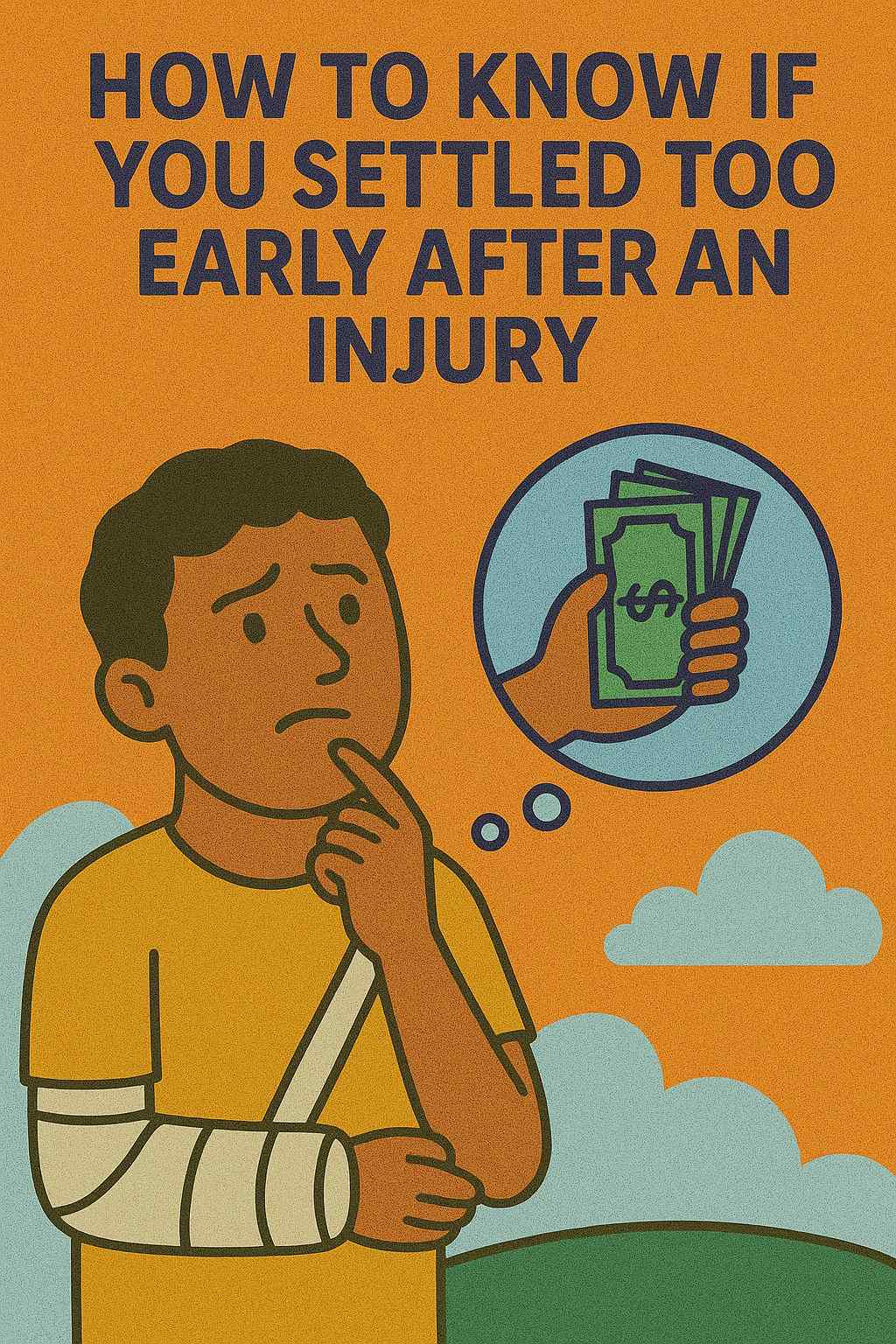
How to Know If You Settled Too Early After an Injury
After an accident, it’s tempting to settle your claim quickly. You’re hurt. Bills are piling up. The insurance adjuster is calling. They might even offer you money right away. But how do you know if you settled too early after an injury?
Many people regret taking the first offer because it often doesn’t cover all their costs. Here’s what you need to know to figure out if you might have accepted a settlement too soon—and what you can do about it.
Why People Settle Early
Insurance companies know you’re stressed and worried about money. They often offer a fast settlement in exchange for you signing a release that closes your claim forever.
People agree to early settlements because they want quick cash to pay bills, they don’t realize how serious their injuries are yet, or they feel pressured by adjusters. While it can feel like relief at the time, settling early can mean you don’t get enough to pay for all your treatment, lost income, and pain and suffering.
Signs You Might Have Settled Too Early
You may have settled too soon if:
You didn’t finish medical treatment before signing. It’s common for injuries to seem minor at first but get worse over time. If you settled before knowing your full diagnosis, you might not have been compensated for all your care.
You didn’t consider future medical needs. Some injuries require long-term treatment, surgeries, therapy, or medication. A settlement should include these costs.
You didn’t account for lost wages or reduced earning capacity. If your injury kept you from working or will affect your future income, that should be included in your claim.
You felt pressured by the insurance adjuster. Adjusters know you’re vulnerable. If you felt rushed or bullied into signing, you might not have received a fair deal.
You didn’t talk to a lawyer. Injury claims can be complicated. A lawyer can calculate what your claim is really worth and deal with the insurance company for you.
You didn’t get a second opinion. It’s a good idea to have another professional look at the offer and your injuries. Doctors can provide better insight into your prognosis.
Why Waiting Can Help
Insurance companies want you to settle fast because they know injuries often get more expensive over time. For example:
A back injury might not seem bad at first but later needs surgery.
Headaches after a crash might turn out to be a traumatic brain injury.
A sprain might be a torn ligament needing physical therapy.
By waiting, you’ll know the full extent of your medical needs and can claim for all of it.
What to Do If You Haven’t Settled Yet
If you haven’t settled your claim yet, take your time and make sure you’re prepared. Don’t let anyone pressure you into rushing the process.
First, focus on completing your medical treatment or at least getting a clear diagnosis and prognosis from your doctor. You need to understand the full extent of your injuries and any future care you might need. Settling before you know this can leave you paying out of pocket later.
Next, gather all the important paperwork. This includes your medical bills, treatment records, receipts for any related expenses, and documentation of lost wages or reduced work hours. Having everything organized makes it easier to prove your damages.
It’s also smart to talk with a personal injury lawyer for advice. Many lawyers offer free consultations where they can review your case, explain your rights, and help you understand what your claim is really worth. They can handle negotiations with the insurance company so you don’t have to deal with the stress or risk accepting too little.
Most importantly, remember this: once you sign a settlement release, you can’t ask for more money later—even if new injuries or complications appear. Take the time now to be sure you’re getting a fair deal that truly covers all of your needs.
Can You Reopen a Settled Claim?
Usually, no.
In most cases, the answer is no.
Once you sign a settlement release, your claim is considered closed for good. This means you can’t go back and ask for more money later, even if your injuries end up being more serious than you originally thought.
There are only a few rare exceptions. For example, if the insurance company committed fraud, misled you, or there was a clear mistake in the settlement paperwork, you might have grounds to challenge it. However, these situations are uncommon and can be difficult to prove.
This is exactly why it’s so important to be completely sure before you sign any settlement agreement. Make sure you understand your injuries, future medical needs, and all the costs involved so you don’t give up your rights too soon.
When to Talk to a Lawyer
If you’re feeling unsure about settling your claim or worried you might be accepting an offer too soon, it’s a good idea to speak with a lawyer. Even if you’ve already settled and have questions about what happened, a lawyer can help you understand your situation and what, if any, options remain.
A personal injury lawyer can explain your rights in clear terms so you know exactly where you stand. They can carefully review any settlement offers you’ve received and help you figure out if the amount is fair and truly covers everything you’ve lost. This includes your medical expenses, lost wages, pain and suffering, and any future costs you might face.
Lawyers are also skilled negotiators who can handle discussions with the insurance company for you. This takes the pressure off your shoulders and helps you avoid being pushed into signing something that isn’t in your best interest.
Most personal injury lawyers offer free consultations and work on a contingency fee basis, which means you don’t pay anything up front. They only get paid if they win money for you, making it easier to get the help you need without worrying about extra costs.
Anderson Franco Law Can Help
Settling an injury claim is a big decision. The insurance company wants to pay as little as possible. You want to make sure you’re covered for everything you’ve lost and will lose in the future.
If you’re unsure about an offer, feeling pressured, or worried you might be making a mistake, talk to a lawyer before signing anything. It could be the difference between struggling with bills for years or having the resources you need to recover fully and move on with your life.

Our Location
Get in Touch
Fill out the contact form or call us at (415) 727-1832 to schedule your free consultation.


