







Medicare vs. Medi-Cal Injury Settlement Reimbursement


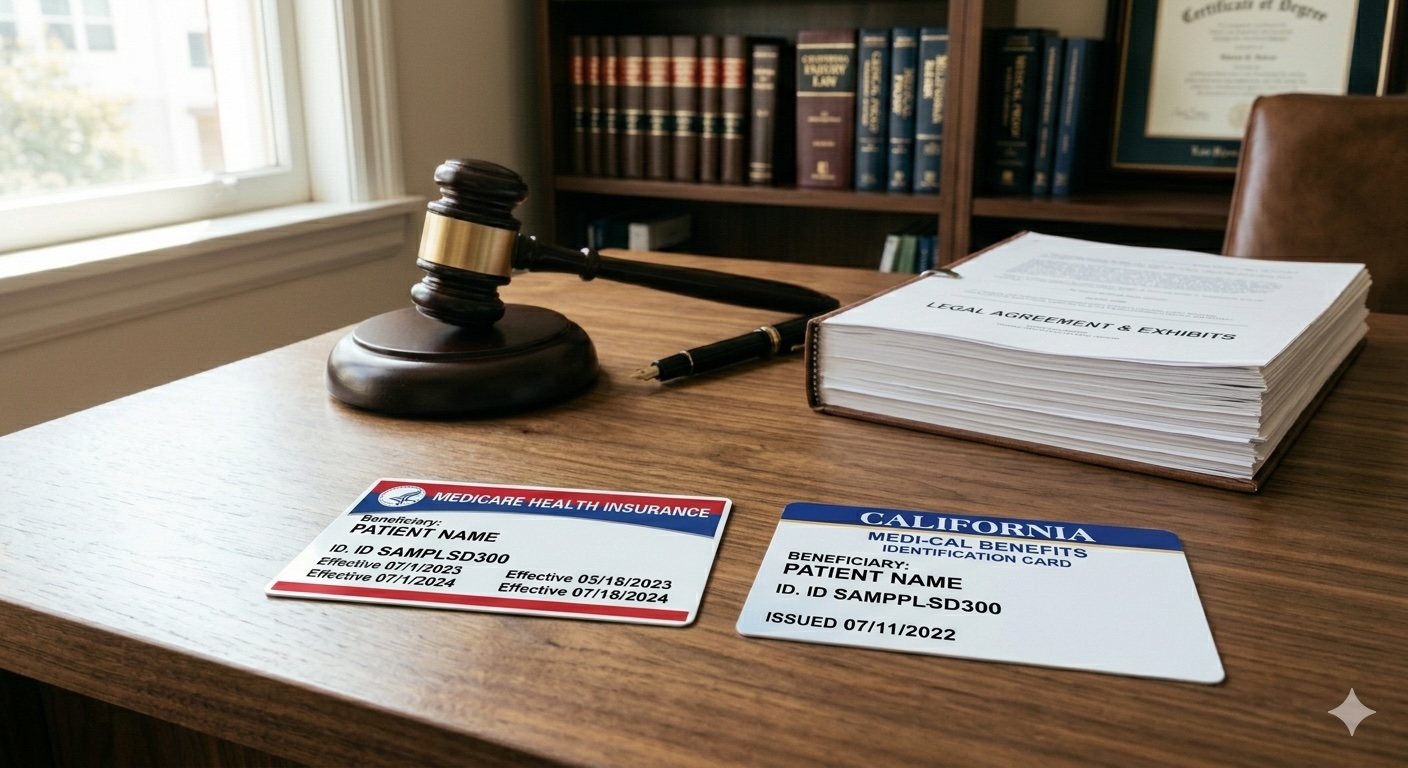
Navigating Government Liens After a Bay Area Accident
Physical recovery after a serious accident demands your full attention. However, complex financial strings often complicate the legal aftermath. If government health programs paid for your medical treatments, you must understand the rules of Medicare vs. Medi-Cal reimbursement after a California injury settlement. These government entities hold an automatic legal right to reclaim their expenditures from your final personal injury payout.
Navigating these distinct systems requires precision. Missteps can delay your financial recovery for months. They can also leave you with far less compensation than you deserve.
Key Differences Between Medicare and Medi-Cal Liens
Both programs provide vital health coverage to residents across San Francisco and Marin County. Yet, they operate under completely separate jurisdictions, timelines, and statutory frameworks.
- Medicare is a federal program. It primarily serves seniors aged 65 and older. It also covers individuals with specific long-term disabilities. Federal law governs its reimbursement rights strictly. These rules completely preempt California state laws.
- Medi-Cal is California’s state Medicaid program. Jointly funded by state and federal governments, it assists low-income individuals and families. The California Department of Health Care Services (DHCS) manages all Medi-Cal recovery efforts.
The legal claims these programs file against your recovery are called liens. Medicare can demand funds for past bills and estimated future injury-related care. It uses complex structures called Medicare Set-Asides (MSAs) for future projections. Conversely, Medi-Cal faces strict limitations under state law. It only recovers funds spent on past medical treatment up to your exact settlement date.
How Federal Law Dictates Medicare Reimbursement Rights
The Medicare Secondary Payer (MSP) manual classifies Medicare as a “secondary” payer. This applies when another party causes your injuries. Suppose you secure a financial recovery from an at-fault driver’s insurance company after a crash on Highway 101 or Interstate 80. Medicare expects full reimbursement for every dollar it spent on your accident-related care.
The federal government utilizes a centralized billing contractor to track these injury claims. When your legal team opens a case, Medicare compiles a conditional payment letter. This letter itemizes every treatment it covered.
The Insider Defense Perspective: I spent years working as an insurance defense attorney. I know exactly how insurance companies evaluate these government liens. Defense lawyers and corporate insurance adjusters will refuse to issue a settlement check without written proof of lien resolution. They act aggressively to protect themselves from federal penalties. Your attorney must proactively dispute unrelated charges on that itemized list. Medicare frequently bunches routine checkups or pre-existing conditions into the accident file. If left unchecked, this confusion can halt your case completely.
How California Law Caps and Reduces Medi-Cal Liens
When you analyze Medicare vs. Medi-Cal reimbursement after a California injury settlement, state law provides powerful protections. The California Welfare and Institutions Code Section 14124.72 limits the state’s recovery rights. These statutory caps ensure the injured victim does not walk away empty-handed.
California law applies two strict rules to reduce your Medi-Cal obligation automatically:
- The 25% Attorney Fee Reduction: Medi-Cal must reduce its gross lien by a flat 25%. This reduction represents the state’s proportional share of the legal fees you paid to secure the recovery.
- The 50% Net Cap: Under Welfare and Institutions Code Section 14124.78, Medi-Cal’s final recovery cannot exceed 50% of the injured person’s net settlement proceeds. This calculation occurs after deducting attorney fees and litigation costs.
A Functional Comparison of Reimbursement Rules
See how these state-specific protections alter your recovery. This example utilizes a hypothetical $50,000 settlement where past medical bills equal $30,000.
| Settlement and Lien Breakdown | The Medi-Cal Scenario (State Law) | The Medicare Scenario (Federal Law) |
| Gross Settlement Amount | $50,000 | $50,000 |
| Attorney Fees & Costs (Hypothetical) | $20,000 | $20,000 |
| Net Proceeds Before Lien | $30,000 | $30,000 |
| Initial Government Medical Lien | $30,000 | $30,000 |
| Statutory Reductions Applied | 25% Fee Reduction + 50% Net Cap | Procurement Cost Ratio Reduction Only |
| Final Government Reimbursement | $15,000 (Capped at half of net) | $18,000 (Based on federal formula) |
| Take-Home Recovery for Victim | $15,000 | $12,000 |
Proactive Strategies for Managing Government Liens
Maximizing your take-home recovery requires an aggressive approach to lien resolution. Government entities move slowly. Bureaucracy can stall your funds for months.
- Immediate Notification: Your legal team must formally notify the Centers for Medicare and Medicaid Services (CMS) or the DHCS within 30 days of filing a claim.
- Strict Audit of Medical Logs: Government billing software routinely sweeps non-accident medical costs into your lien file. Your lawyer must review every single line item carefully. You should never pay back the government for treatments unrelated to your accident.
- Leveraging Equity Arguments: Policy limits are often small, especially if you face a minimum insurance policy in California. If you suffer catastrophic injuries, your attorney can petition for additional hardware reductions based on financial hardship.
Authoritative Support Directly from Anderson Franco
Dealing with the administrative bureaucracy of Medicare or Medi-Cal can feel overwhelming. Many high-volume, assembly-line personal injury mills pass clients off to automated case managers. Anderson Franco Law, APC rejects this model. We provide clients with elite representation and direct, personal access to the primary attorney.
Anderson Franco is a San Francisco Bay Area native. He earned both his undergraduate and law degrees from UC Berkeley. Anderson pairs deep local commitment with a sharp insider knowledge of insurance defense tactics. Mr. Franco understands exactly how insurance companies evaluate risk, exploit lien confusion to delay payouts, and attempt to undervalue complex claims.
If you or a loved one are navigating a personal injury claim involving government health coverage in San Francisco, San Rafael, or across Marin County, you may be eligible for compensation. Ensure your settlement structure protects your financial future. Check our FAQs and Resources for more insights, or contact us today to review your recovery options.
Disclaimer: The information provided in this article is for informational purposes only and does not constitute formal legal advice. No attorney-client relationship is formed by reading this post. Personal injury evaluations depend entirely on the unique facts of each individual case.
Get in Touch
Fill out the contact form or call us at (415) 727-1832 to schedule your free consultation.


Contact Us Now For a Free Case Evaluation
Our Locations

Suite 400
San Francisco, CA 94105

San Rafael, CA 94903

Suite 118
Greenbrae, CA 94904