





The Civil Jury Process in California: Step-by-Step Guide


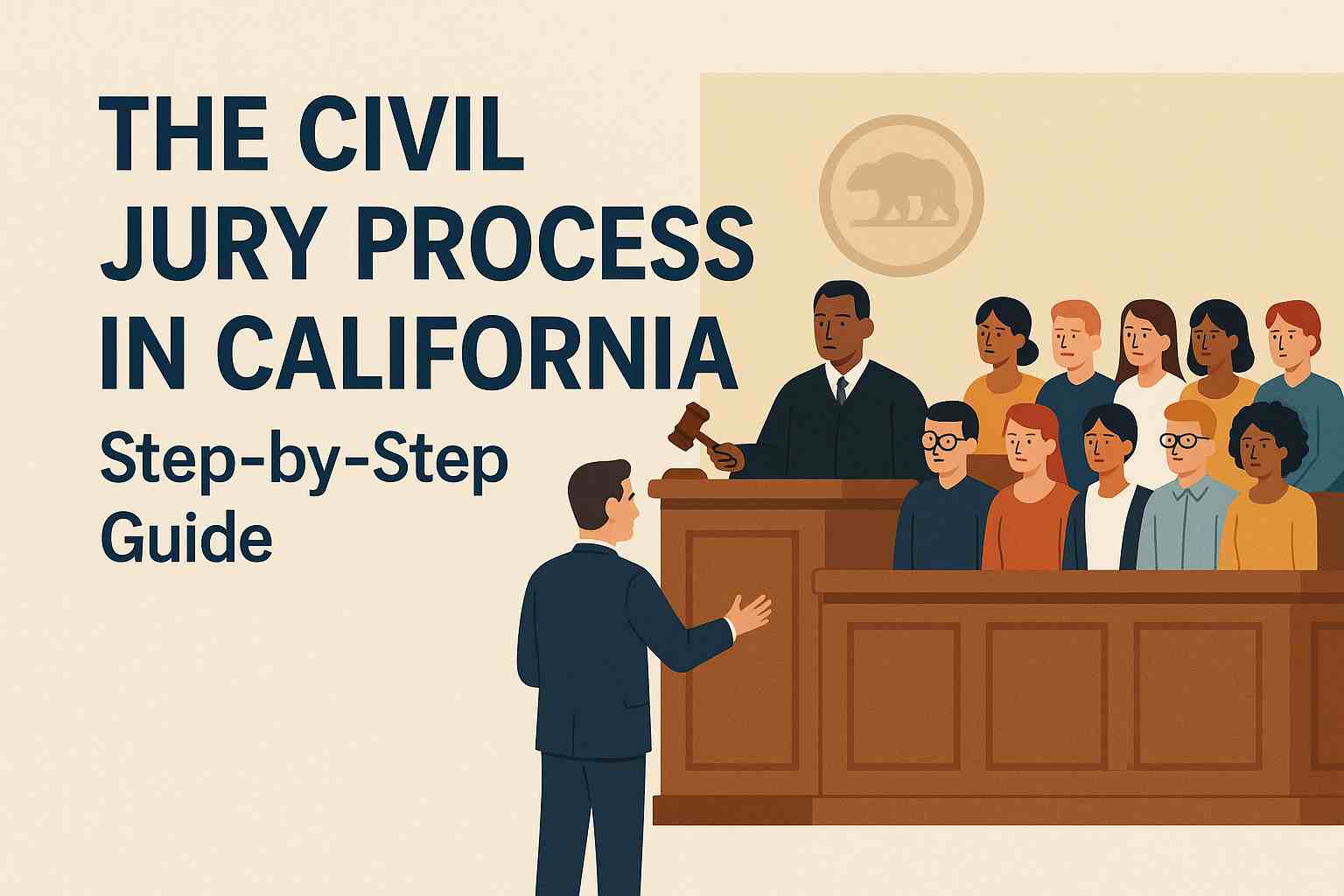
1. Being Called for Jury Duty
The process starts when you receive a jury summons in the mail. This is not junk mail—it is a legal order requiring you to appear at the courthouse. The summons includes:
- The date and time you must appear.
- The courthouse location.
- Instructions on how to confirm your attendance, often by phone or online.
It’s important to note that being called does not mean you are already serving on a jury. It simply means you are part of the pool of people who could potentially be selected.
In California, jurors are chosen at random from voter registration lists and Department of Motor Vehicles (DMV) records. This random selection is meant to ensure fairness and diversity among jurors.
2. Checking In at the Courthouse
On the date listed in your summons, you must report to the courthouse. Arriving on time is essential, as courts run on strict schedules. After going through security, you will sign in and typically be directed to the jury assembly room.
Here’s what usually happens:
- A court clerk will explain the process for the day.
- You may watch a short orientation video about jury duty.
- You will wait until your name is called for a specific courtroom.
Sometimes, you may spend the entire day waiting and never be called into a courtroom. If that happens, your service for the day may be considered complete. Other times, you may be called right away.
3. Entering the Courtroom
When your name is called, you will be escorted with a group of other potential jurors into a courtroom. This is your first close look at the trial setting. Inside, you’ll see:
- The judge at the bench overseeing the process.
- The lawyers for both sides.
- The plaintiff and defendant (the parties involved).
- Court staff such as clerks, bailiffs, and sometimes a court reporter.
Remember, this is a civil case. That means the dispute usually involves money damages, property, or fairness—not criminal punishment like jail or prison. Examples of civil cases include personal injury lawsuits, employment disputes, and contract disagreements.
4. Jury Selection (Voir Dire)
The next stage is called voir dire, which means “to speak the truth.” This is the jury selection process.
Here’s what to expect:
- Questions from the judge and lawyers: They will ask about your background, experiences, and opinions. For example, in a personal injury case, they may ask if you or your family members have ever been in a car accident.
- Excusals for cause: If it becomes clear that you cannot be impartial (for instance, if you know one of the parties), you may be excused.
- Peremptory challenges: Lawyers can also excuse certain jurors without giving a reason, though there are limits to prevent discrimination.
Not everyone called for jury duty will serve on a case. Many people are dismissed after voir dire.
5. The Trial Begins
If you are selected, congratulations—you are now officially a juror. In most California civil cases, there are 12 jurors, although some cases may use fewer with agreement from the parties.
The trial usually begins with opening statements. These are not evidence, but roadmaps of what each side believes the case will show.
- The plaintiff’s lawyer goes first, explaining the claims and what they intend to prove.
- The defendant’s lawyer follows, describing their side of the story.
Opening statements help you understand what to watch for during the trial.
6. Listening to the Evidence
Evidence is the foundation of any trial. Jurors must base their decision only on the evidence presented in court—not on personal research, news articles, or outside conversations.
In civil trials, the order of presentation is:
- Plaintiff’s case-in-chief: The plaintiff presents evidence to support their claims. This may include:
- Testimony from witnesses.
- Medical records, contracts, or other documents.
- Photographs, diagrams, or videos.
- Testimony from expert witnesses, such as doctors or engineers.
- Defendant’s case: The defendant then presents evidence to dispute the plaintiff’s claims or support their own defenses. This can include calling their own witnesses or presenting contradictory evidence.
- Rebuttal: Sometimes the plaintiff offers additional evidence to respond to points raised by the defense.
Throughout this process, you as a juror must listen carefully, take notes if permitted, and keep an open mind.
7. Closing Arguments
After all the evidence has been presented, the lawyers give closing arguments. These are powerful summaries meant to persuade you. Each side will:
- Review the evidence that supports their position.
- Point out weaknesses in the other side’s case.
- Ask you to apply the law in their client’s favor.
While closing arguments can be dramatic and emotional, remember that they are not evidence. They are simply each lawyer’s interpretation of the case.
8. Judge’s Instructions
Once closing arguments are complete, the judge gives you instructions on the law. These are extremely important, as they tell you how to apply the law to the facts you heard.
Examples of instructions include:
- How to determine negligence.
- How to calculate damages.
- The burden of proof in civil cases (which is “preponderance of the evidence,” meaning more likely than not).
The instructions act as the legal framework you must follow when deciding the case.
9. Jury Deliberations
After receiving instructions, you and your fellow jurors will go to a private room to deliberate. This is where the real work begins.
During deliberations, you will:
- Review the evidence and testimony.
- Discuss the strengths and weaknesses of each side’s case.
- Vote on the issues the judge has outlined.
In California civil cases, the jury does not have to be unanimous. Instead, at least 9 of the 12 jurors must agree for a verdict to be reached. This rule helps ensure that cases can still be resolved even if there are some disagreements.
10. The Verdict
Once the jury reaches a decision, it is recorded on a verdict form. The jurors then return to the courtroom, where the judge reads the verdict aloud.
The verdict determines the outcome:
- If the plaintiff wins, the jury may award money damages.
- If the defendant wins, the plaintiff receives nothing.
- Sometimes, the jury may award partial damages depending on fault.
The verdict is the official conclusion of the jury’s role in the case.
11. After the Verdict
When the verdict is delivered, the jury’s job is complete. For jurors, this often feels like a relief after days or weeks of careful listening and discussion.
But for the parties, the case may not end there. Sometimes one side may file an appeal, asking a higher court to review the trial for legal errors. Appeals can take months or even years, but jurors are not involved in that process.
Why Jury Duty Matters
Many people see jury duty as inconvenient. It takes time away from work, family, and personal responsibilities. But it is one of the most important duties of citizenship.
Civil juries play a vital role by:
- Ensuring that justice is decided by a group of peers, not just by a single judge.
- Providing community standards of fairness.
- Giving ordinary citizens a direct voice in the legal system.
Without juries, people with less power or resources might not have a fair chance against large corporations or insurance companies. Jury duty protects everyone’s rights.
Frequently Asked Questions About Civil Jury Duty in California
Most jurors serve for one day unless selected for a trial. Civil trials can last anywhere from a few days to several weeks, depending on the complexity of the case.
Yes. Jurors receive a small daily payment (currently $15 per day after the first day) and mileage reimbursement. Some employers also continue to pay employees while they serve.
Yes, in limited situations. You may be excused for hardship (such as serious medical conditions, caregiving responsibilities, or financial difficulties) or if you cannot be impartial.
No. In California civil cases, only 9 out of 12 jurors must agree on the verdict.
Ignoring a jury summons can lead to fines or even contempt of court. It is important to respond, even if you believe you have a reason to be excused.
Courts expect jurors to dress neatly and respectfully. Business casual is typically recommended. Avoid shorts, flip-flops, or clothing with offensive images or language.
Jury Duty: Be Ready, Be Proud
The civil jury process in California may seem overwhelming at first, but it follows a clear path: summons, selection, trial, deliberation, and verdict. Each step is designed to ensure fairness for both sides.
When you serve on a jury, you are not just deciding one case—you are protecting the fairness of the entire justice system. It is a serious responsibility, but also a meaningful way to contribute to your community.
👉 Need help with a civil case in California? At Anderson Franco Law, we represent clients throughout the Bay Area in personal injury and civil matters. Our team has years of experience navigating the civil justice process. Call us today for a free consultation to learn how we can help you.

Our Location
Get in Touch
Fill out the contact form or call us at (415) 727-1832 to schedule your free consultation.


