





What Evidence Do I Need for My Injury Case


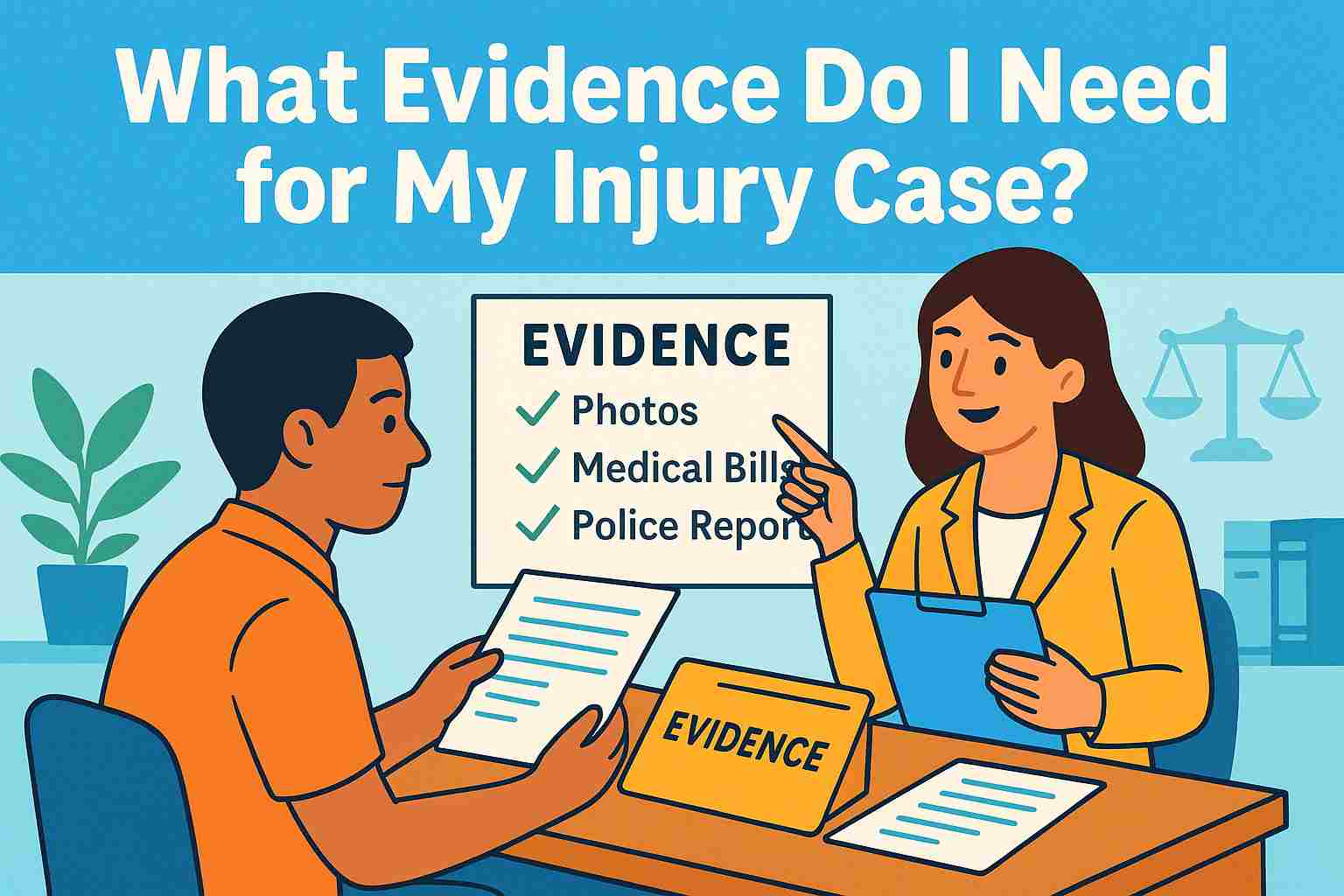
What Evidence Do I Need for My Injury Case: Complete Guide for Victims in California
If you have been injured due to someone else’s negligence in the San Francisco Bay Area, one of the most important questions you should ask yourself is: “What evidence do I need for my injury case?” The answer to this question can determine the success of your claim and the compensation you receive.
Building a strong personal injury case requires compelling evidence that demonstrates both the defendant’s liability and the extent of your damages. In this article, we will take a detailed look at what evidence you need for your injury case and how to obtain it effectively.
Legal Basics: Why Evidence Is Crucial
In California, to win a personal injury case, you must prove four key elements:
- Duty of care: The defendant had a legal obligation to act with reasonable care
- Breach of duty: The defendant failed to meet that duty of care
- Causation: The defendant’s actions directly caused your injuries
- Damages: You suffered actual harm as a result
Understanding what evidence you need for your injury case means knowing what proof supports each of these legal elements.
Medical Evidence: The Foundation of Your Case
Immediate Medical Records
Medical evidence is fundamental when asking what evidence you need for your injury case. You should obtain:
- Emergency room records: Documentation of your initial treatment
- Diagnostic reports: X-rays, MRIs, CT scans
- Doctor’s notes: Detailed observations about your injuries and symptoms
- Specialist records: Reports from orthopedists, neurologists, or other specialists
Ongoing Treatment Documentation
To show the full extent of your injuries, you need evidence of:
- Physical therapy and rehabilitation sessions
- Prescribed medications and their cost
- Alternative treatments recommended by doctors
- Surgeries performed or scheduled
Medical Prognosis
Medical reports that include a long-term prognosis are crucial to determining what evidence you need for your injury case, especially for:
- Permanent disabilities
- Need for future treatment
- Limitations in daily activities
- Impact on work capacity
Incident Evidence: Building Liability
Police and Emergency Reports
Depending on the type of accident, you will need:
- Police reports: For motor vehicle accidents
- Incident reports: For accidents on commercial properties
- Fire department reports: For incidents requiring emergency response
- Safety reports: For workplace accidents
Photographic Evidence
Photographs are essential when considering what evidence you need for your injury case:
- Pictures of the accident scene from multiple angles
- Images of the vehicles involved (in motor vehicle accidents)
- Photos of hazardous conditions (wet floors, poor signage)
- Images of your visible injuries
- Photos of damage to personal property
Video Evidence
In today’s digital era, video evidence can be decisive:
- Surveillance camera footage from the area
- Dashcam recordings from vehicles
- Videos taken by witnesses on cell phones
- Traffic camera recordings
Witness Testimony: Independent Voices
Eyewitnesses
Witness statements are key to answering what evidence you need for your injury case:
- Complete contact information: Names, phone numbers, addresses
- Written statements: Detailed accounts of what they observed
- Availability to testify: Confirmation they can appear in court
Expert Witnesses
Depending on the complexity of your case, you may need:
- Accident reconstruction experts: For complex auto accident cases
- Medical experts: To explain complicated injuries
- Safety experts: For premises liability cases
- Economists: To calculate future financial losses
Financial Documentation: Proving Your Damages
Medical Expenses
To establish the monetary value of your case, gather:
- Detailed hospital bills
- Medication receipts
- Physical therapy and rehabilitation invoices
- Costs of medical equipment (crutches, wheelchairs, etc.)
- Estimates for future treatment
Lost Income
When evaluating what evidence you need for your injury case related to economic losses:
- Pay stubs: To show pre-accident income
- Tax returns: To establish income patterns
- Employer letters: Confirming missed time and wages
- Lost benefits records: Health insurance, vacation, bonuses
Other Related Expenses
Don’t forget to document additional costs such as:
- Domestic or childcare assistance
- Home modifications for disabilities
- Transportation to medical appointments
- Costs to replace damaged property
Evidence Specific to the Type of Accident
Motor Vehicle Accidents
For traffic accident cases, what evidence you need for your injury case includes:
- Vehicle maintenance records
- Evidence of traffic violations
- Cell phone records (for distracted driving cases)
- Vehicle inspection reports
Slip and Fall Accidents
For these cases, you will need evidence of:
- Hazardous property conditions
- History of similar incidents
- Property maintenance protocols
- Safety inspection records
Workplace Accidents
In workers’ compensation cases, consider:
- Workplace safety reports
- Safety training records
- OSHA violation history
- Coworker testimony
Preserving Evidence: Acting Quickly
Critical Deadlines
Understanding what evidence you need for your injury case also means knowing when to get it:
- Security camera footage is often overwritten after 30–90 days
- Witnesses may forget important details over time
- Physical evidence can deteriorate or be lost
- Medical records should be obtained while they are fresh
Preservation Methods
To protect crucial evidence:
- Send preservation letters to responsible parties
- Make copies of all important documents
- Store digital evidence in multiple locations
- Keep organized, dated records
Personal Documentation: Your Recovery Journal
Pain and Symptom Diary
Keeping a daily record can be invaluable in showing what evidence you need for your injury case:
- Daily pain levels (scale of 1–10)
- Activities you cannot perform
- Side effects from medication
- Emotional and psychological impact
Limited Activity Documentation
Track how the injuries affect your daily life:
- Recreational activities you can no longer enjoy
- Household tasks requiring assistance
- Limitations in self-care
- Changes in family relationships
Digital Evidence and Social Media
Important Considerations
In the digital age, when considering what evidence you need for your injury case, you must be aware that:
- Insurance companies monitor your social media
- Posts can contradict your injury claims
- Photo metadata can provide location and time evidence
- Digital activity records can be subpoenaed
Best Practices
To protect your case:
- Limit social media activity during legal proceedings
- Set all accounts to private
- Avoid posting photos that could be misinterpreted
- Consult your attorney before posting anything related to your injury
Working with Legal Professionals
When to Seek Professional Help
A personal injury lawyer can help you fully understand what evidence you need for your injury case and:
- Identify evidence you may overlook
- Access resources to obtain hard-to-get evidence
- Hire experts needed for your specific case
- Ensure all evidence is admissible in court
Choosing Representation in the Bay Area
When selecting an attorney in San Francisco and the Bay Area, look for:
- Specific experience in cases similar to yours
- Knowledge of California state and local laws
- Access to a network of medical and technical experts
- Proven track record of successful outcomes
Common Mistakes to Avoid
Evidence Collection Mistakes
When considering what evidence you need for your injury case, avoid these common errors:
- Waiting too long to seek medical treatment
- Not following doctors’ treatment recommendations
- Signing insurance company documents without legal advice
- Giving recorded statements without representation
Documentation Mistakes
- Not keeping organized expense records
- Discarding receipts or bills related to the injury
- Failing to document symptoms that appear days later
- Not maintaining a consistent record of limitations
Special Considerations for California
Relevant State Laws
In California, what evidence you need for your injury case is influenced by:
- Comparative negligence: Your compensation may be reduced if you share some fault
- Statute of limitations: Generally two years for personal injury cases
- Liability limits: Different caps for different types of defendants
Unique Factors in the Bay Area
Cases in San Francisco and surrounding areas may have special considerations:
- High cost of living affecting damage calculations
- Specific local regulations for commercial properties
- Unique traffic challenges on bridges and highways
- Cultural diversity that can affect witness communication
Conclusion
Understanding what evidence you need for your injury case is fundamental to building a successful personal injury claim in California. Strong evidence not only strengthens your legal position but can mean the difference between inadequate compensation and an award that truly covers all your damages.
Remember that effective evidence collection requires immediate action. The sooner you start documenting and preserving evidence, the better your position will be to obtain the compensation you deserve.
The complexity of determining what evidence you need for your injury case underscores the importance of seeking professional legal advice. An experienced attorney can guide you through the process, ensure you don’t overlook crucial evidence, and maximize the value of your claim.
If you have been injured due to someone else’s negligence in the San Francisco Bay Area, don’t let valuable evidence be lost. Take action today to protect your rights and ensure you have the evidence necessary for a successful case.
This article is for informational purposes only and does not constitute legal advice. For specific advice about what evidence you need for your particular case, consult with a qualified personal injury attorney in California.

Our Location
Get in Touch
Fill out the contact form or call us at (415) 727-1832 to schedule your free consultation.


