




Who Pays Medical Bills After a Car Accident in California?


Who Pays Medical Bills After a Car Accident in California? Health Insurance, MedPay, Liens, and Reimbursement Explained
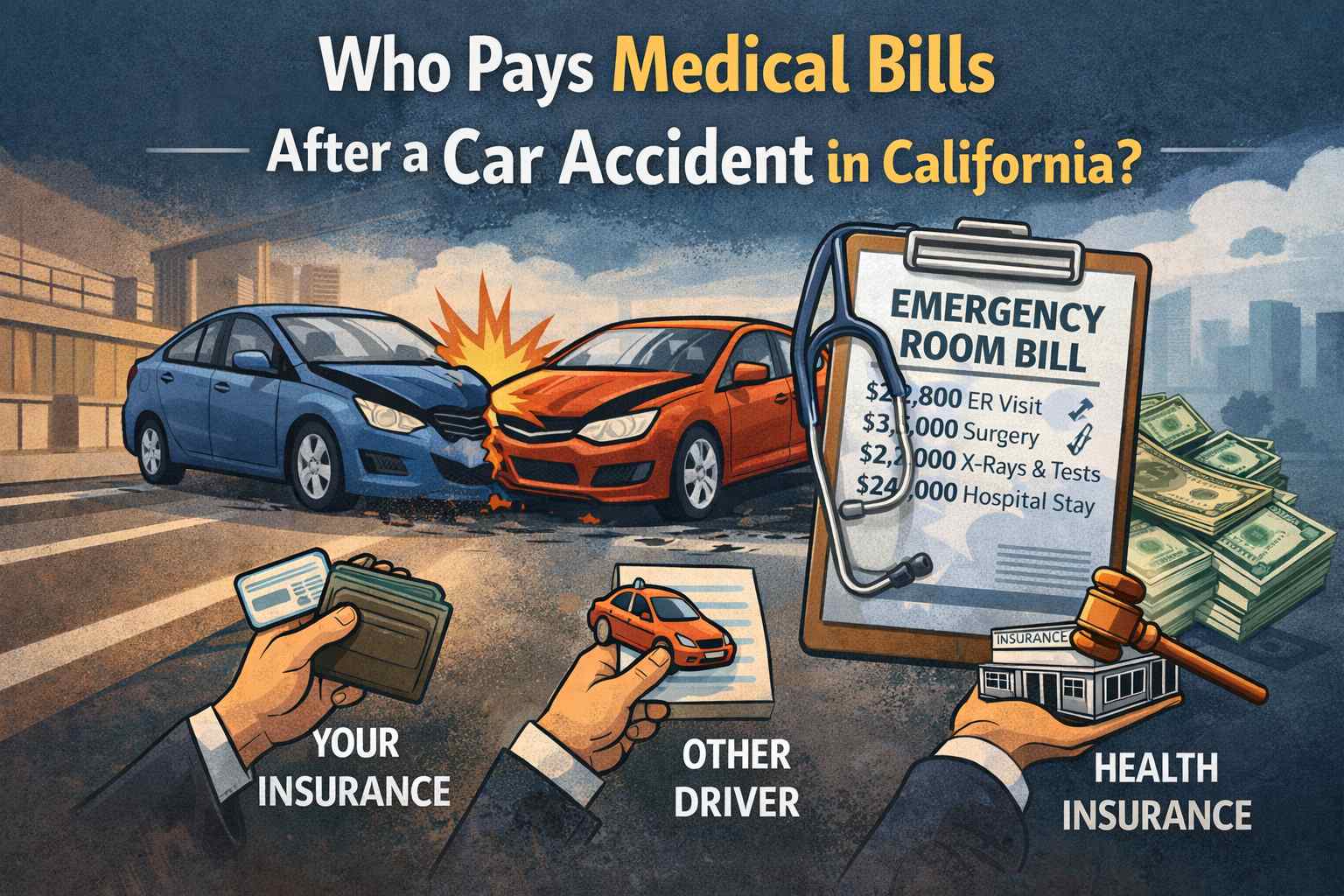
One of the most common questions after a California car accident is simple: who pays the medical bills?
The answer is often more complicated than injured people expect. In many cases, the at-fault driver’s insurance company does not simply pay ongoing medical bills as treatment happens. Instead, immediate care is often paid through health insurance, MedPay coverage, or treatment arrangements such as a lien, while the bodily injury claim is investigated and resolved later. The California Department of Insurance explains that Medical Payments Coverage can pay limited medical expenses regardless of fault, and that health insurance usually pays immediate medical care first, with subrogation often becoming an issue later.
That is why understanding medical-bill strategy early matters. The way treatment gets paid during the case can affect the claim, the lien picture, and the net recovery at settlement.
Does the at-fault insurance company pay medical bills right away?
Usually not in the way many people assume.
In a California bodily injury claim, the liability insurer for the at-fault driver is often evaluating fault, medical records, causation, and value while the injured person is treating. The claim may eventually include past and future medical expenses, but that is not the same thing as the insurer paying each bill as it arrives.
That gap is where other payment sources often come into play.
What is MedPay in California?
Medical Payments Coverage, often called MedPay, is optional auto-insurance coverage that can help pay medical expenses after a crash. The California Department of Insurance explains that MedPay can pay for immediate medical care no matter who was at fault, and that it pays limited medical expenses for people injured in the car being driven. The Department’s consumer materials also note that the minimum limit available is $1,000 per person, though higher limits can be purchased.
MedPay is often helpful because it may provide a source of early payment without waiting for the liability claim to resolve. Not every driver has it, and the amount can be limited, but it is an important coverage to check.
Can health insurance pay for treatment after a car accident?
Yes. In many cases, health insurance pays for immediate medical care first.
The California Department of Insurance states that health insurance usually pays for immediate care after an accident and that the health insurer will typically try to recover money later from auto insurance or the other driver’s insurance through subrogation.
That is why many injured people later receive letters from companies such as Rawlings or Equian, or reimbursement claims connected to a health plan. The bills may have been paid earlier, but the reimbursement issue can arise later when the injury case settles.
What is a medical lien?
A medical lien is different from ordinary health-insurance billing.
In a lien arrangement, a provider may agree to treat with payment deferred until the case resolves. Then the provider seeks payment from settlement proceeds. In practice, liens often appear when a patient does not want to rely only on ordinary health-insurance channels, or when there is a need for treatment tied closely to the injury case.
Liens can be useful, but they also create settlement issues. The gross settlement amount and the net recovery are not the same thing. Medical liens, health-plan reimbursement claims, attorney’s fees, and case costs all affect the final number.
Why did I get a reimbursement or subrogation letter?
Because the company that paid benefits may be trying to recover some of what it paid.
That issue often appears after a car accident when health insurance or a related claims-recovery company asserts reimbursement or subrogation rights. In California, Civil Code section 3040 limits certain health care service plan and disability-insurance liens. If the injured person has an attorney, the lien generally may not exceed the lesser of the allowable amount under the statute or one-third of the money due under the final judgment, compromise, or settlement agreement. If the person did not engage an attorney, the statute uses a one-half cap. The statute also provides for reduction based on comparative fault and pro rata reduction for reasonable attorney’s fees and costs under the common fund doctrine.
Not every reimbursement claim is governed the same way, and not every payer has identical rights. But the basic point is that payment of bills on the front end often creates reimbursement questions on the back end.
What if State Farm or another insurer will not pay bills?
That depends on which policy and which coverage is involved.
Sometimes the dispute is with the at-fault driver’s bodily injury insurer. Sometimes it involves MedPay. Sometimes it involves your own carrier, an uninsured or underinsured motorist claim, or a dispute over what treatment was reasonable, necessary, or related to the crash.
The California Department of Insurance also explains that insurers are required to advise claimants of benefits, start investigating promptly, respond within required time frames, and offer a fair settlement under the Fair Claims Settlement Practices Regulations.
That does not mean every dispute is easy to resolve. It means the claim should be evaluated in light of the actual policy, claim posture, and evidence.
Can you recover medical expenses in a personal injury case?
Yes you can recover medical expenses in a personal injury case. In an appropriate California car accident case, past and future medical expenses may be part of the damages claim, depending on the evidence and the facts.
But there is an important difference between recovering medical damages as part of a settlement or judgment and getting bills paid during treatment. Those are related issues, but they are not the same issue.
What should injured people do early in the case?
They should identify every possible source of payment and every possible reimbursement issue. That often includes:
- reviewing the auto policy for MedPay,
- reviewing health-insurance use,
- tracking out-of-pocket costs,
- preserving bills and records,
- and understanding whether any lien or reimbursement claim may arise later.
The sooner that gets organized, the easier it is to make informed decisions about treatment and settlement.
How Anderson Franco Law helps with medical-bill issues after a crash
At Anderson Franco Law, medical-bill issues are part of the bigger injury-claim analysis. The legal issue is not just whether someone was hurt. It is also how treatment is getting paid, what reimbursement claims may exist, what insurance coverages apply, and how those issues affect the net recovery.
A good car accident case strategy has to account for both the injury claim and the medical-bill structure around it.
Need help after a California car accident?
If you are dealing with medical bills, MedPay issues, reimbursement letters, or settlement questions after a crash, Anderson Franco Law can help evaluate the claim and explain the options.
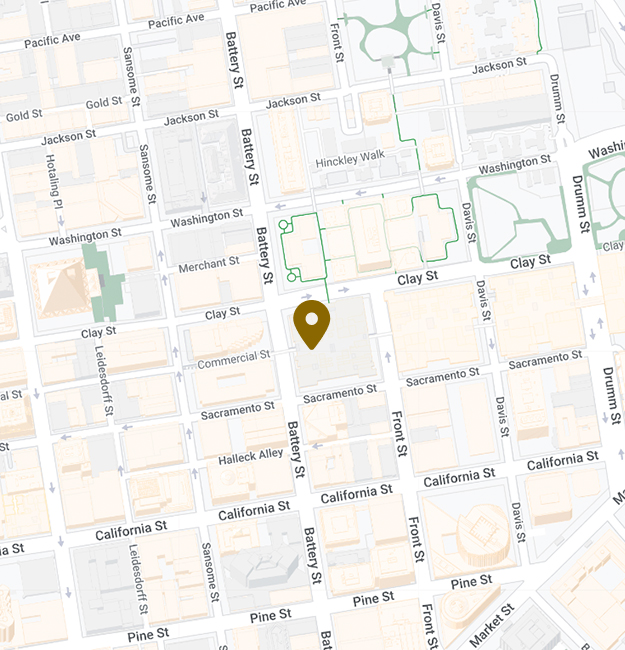
Our Location
Get in Touch
Fill out the contact form or call us at (415) 727-1832 to schedule your free consultation.


